
General Information
What is the Medwarm Patient Warming System?
What components are included in the system?
Can the system be used for adults, paediatric, and neonatal patients?
Can Medwarm pads be used with other manufacturers’ control units (or vice versa)?
Operation
What types of warming pads are available?
Can I use a mattress and a blanket together?
What is the temperature range of the system?
How long does the system take to reach temperature?
How do I set the temperature?
How long can I use the system on battery power?
Can I fold the mattress or blanket during use?
Safety
Are Medwarm warming pads sterile?
Can I use the system if fluids collect under the patient?
Can I use Medwarm alongside other heat sources?
What happens if temperature exceeds safe limits?
Alarms
What alarms are available on the system?
How do I silence an alarm?
What should I do if an alarm occurs?
Maintenance & Cleaning
How should control units and pads be disinfected between patients?
Which disinfectants are compatible?
Can pads be immersed, machine washed, or autoclaved?
What covers are available to support infection prevention?
How often should the system undergo maintenance?
What is the product lifespan of Medwarm?
Storage
How should pads be stored when not in use?
Can equipment be placed on top of pads?
Troubleshooting
What should I do if the pad is not warming properly?
What does “NO PAD” mean?
What should I do if I get “HIGH”, “DEVIATION”, or “INOP” message?
General Information
What is the Medwarm Patient Warming System?
The Medwarm Patient Warming System is an active (electrical resistive) warming system designed to help prevent and manage unwanted hypothermia. It warms patients via Medwarm warming pads (mattresses and blankets) connected to Medwarm control units.
What components are included in the system?
The system consists of two main elements:
- Medwarm Control Units (e.g., W-500D, W-300, W-150TL, W-150T)
- Medwarm Warming Pads (including mattresses and blankets, in multiple sizes and styles)
Can the system be used for adults, paediatric and neonatal patients?
Yes - the system is suitable for all patient groups when the correct pad type/size is selected. However, you must match the pad to the patient group and not use adult pads for newborns/babies.
Only the Medwarm Neonatal Warming Mattress should be used for neonates.
Can Medwarm pads be used with other manufacturers’ control units (or vice versa)?
No. Medwarm warming pads should only be used with Medwarm control units.
Operation
What types of warming pads are available?
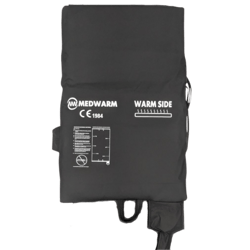
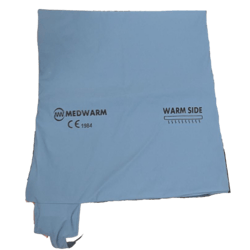
The Medwarm Patient Warming System is available with both warming mattresses and warming blankets:
- Mattresses are designed to be placed under the patient.
- Blankets are designed to be placed over the patient.
Can I use a mattress and a blanket together?
Yes. Medwarm warming mattresses and blankets can be used either individually or at the same time.
A double-port control unit (W-500D) is available to power a mattress and blanket at the same time from the control unit, or they can be powered by separate control units.

What is the temperature range of the system?
The Medwarm Patient Warming System has a temperature range of 30–40°C, controllable in 0.1°C increments.
How long does the system take to reach temperature?
At room temperature on a suitable surface, a warming pad can reach 40°C within 3–15 minutes (time varies by pad size and control unit).
How do I set the temperature?
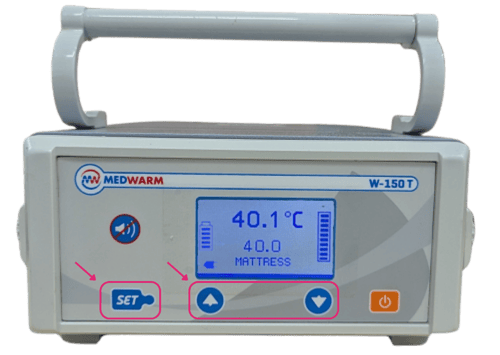
Use the control unit’s SET function: press SET, adjust up/down (0.1°C), then press SET again to confirm. The unit typically auto-locks after ~10 seconds to prevent accidental changes.
How long can I use the system on battery power?
Battery operation applies to the control unit model W-150TL. On a full charge, it will provide heating for up to ~3 hours.
For transport use, the battery should be fully charged for at least 3 hours within the last 4 days.
Can I fold the mattress or blanket during use?
No. While operating, do not fold or crumple the surface of the pads (this poses a risk of overheating and alarms).
Blankets should remain flat during use and must never be rolled around the patient.
Safety
Are Medwarm warming pads sterile?
No. Pads are not sterilised and are supplied non-sterile. If aseptic conditions are required, use appropriate covers/barriers.
What key safety checks should be done before patient use?
After the pad warms up, it is recommended to manually touch-check multiple areas for any signs of overheating before placing with a patient. Also inspect pads for damage (worn, torn, punctured, darkened, etc.) - if damaged, do not use.
Can I use the system if fluids collect under the patient?
Fluid accumulation beneath the patient is contraindicated (risk of irritation/skin injury). Keep pads dry and prevent solutions from pooling under the patient - particularly in long procedures or where antiseptics are used.
Can I use Medwarm alongside other heat sources?
No. Do not use the system in combination with other heating sources (e.g., hot water, heating lamps).
What happens if temperature exceeds safe limits?
The system includes multiple safety layers:
- High Temperature Alarm at ≥41.1°C for adult pads
- If overheating continues, the control unit stops heating
- An additional independent mechanical cut-out disables heating around 42-43°C if needed
Alarms
What alarms are available on the system?
Common alarms include:
- High Temperature Alarm
- Pad/Sensor Alarm (“NO PAD”)
- Temperature Deviation Alarm (deviation > ±1°C from set)
- INOP Alarm (pad not heated to 30°C within first 10 minutes)
- Power Alarm (with models W-300 and W-500D)
- Low Battery Alarm (with model W-150TL)
How do I silence an alarm?
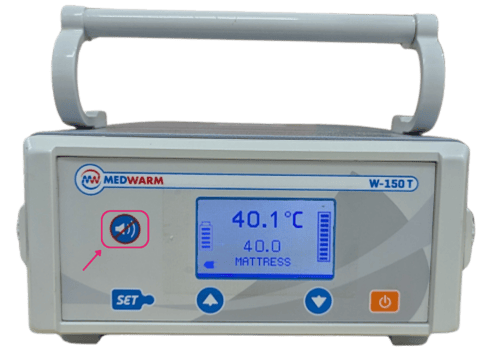
Most alarms can be silenced using the Alarm Silence button for 10 minutes (visual warnings remain). Power alarm is described as non-silenceable.
What should I do if an alarm occurs?
If an alarm occurs, stop using the system, identify the cause and act accordingly.
In high temperature or deviation alarms, user action includes switching off the unit and removing the pad from the patient.
If the fault cannot be corrected, request service.
Maintenance & Cleaning
How should control units and pads be disinfected between patients?
To disinfect the pads between patients, use a two-step wipe-down approach:
- Disconnect power and cables; wipe surfaces to remove dust/soil with a slightly moistened cloth (do not spray directly on control units).
- Wipe all surfaces using a colourless liquid disinfectant that leaves no residue, then wipe again with a cloth moistened with water and dry.
Which disinfectants are compatible?
Compatible disinfectants include 70% ethanol and Fugaten spray derivatives. Chlorine-based disinfectants can be used below 10,000 ppm, but surfaces should be wiped again with a damp cloth afterwards.
Can pads be immersed, machine washed, or autoclaved?
No. Do not immerse pads/cables in liquids, do not autoclave, and do not wash pads in washing machines. Avoid solvents such as thinner/solvent.
Reusable covers only can be machine washed at 90°C.
What covers are available to support infection prevention?
Two cover types are available for the Medwarm warming pads:
- Disposable covers (single use; non-sterile)
- Reusable polyurethane covers (non-sterile; washable and reusable up to 50 times)
How often should the system undergo maintenance?
The system should undergo initial maintenance/inspection after 2 years, then annually by authorised service providers.
What is the product lifespan of Medwarm?
- Control units: 10 years
- Warming mattresses/blankets (pads): 6 years, provided they are used with reusable covers
- Battery (model W-150TL): ~2 years (performance may reduce depending on charging cycles)
Storage
How should pads be stored when not in use?
Store pads cleaned and flat, ideally in their own boxes, away from sharp objects, direct sunlight/UV, water/liquids and high humidity.
Can pads be folded for storage/transport?
- Do not fold the mattress during use.
- If folding is necessary for storage/transport, fold only once lengthways (in half) and do not roll, crumble, compress, or fold more than once.
Can equipment be placed on top of pads?
No. Do not place heavy objects (including control units) on top of pads, as this can cause damage.
Troubleshooting
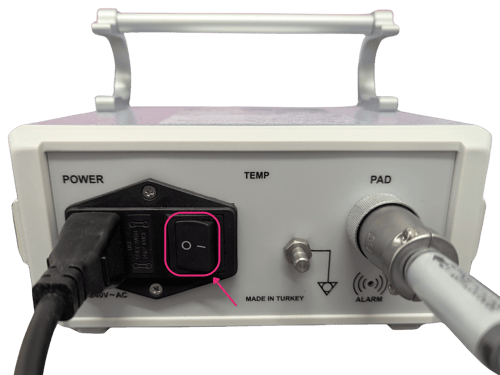
What should I do if the display does not turn on?
Check:
- Power switch is on at the back of the control unit
- Power cable is connected correctly
- Mains power is available
- Fuse is intact (replace with correct spare if blown)
If the display still does not turn on, contact technical service.
What should I do if the pad is not warming properly?
If the pad cannot reach 37°C within the first 10 minutes at room temperature (~23±2°C) on a suitable surface, do not use the system for medical purposes and contact technical service.
What does “NO PAD” mean?
“NO PAD” on the display indicates the pad/sensors are disconnected, short-circuited, or faulty. Check pad connections for integrity and restart the system after reconnecting.
What should I do if I get “HIGH”, “DEVIATION”, or “INOP” message?
- Switch off the control unit
- Remove the pad from the patient
- Allow the pad to cool (if relevant)
- Restart only after correcting the cause; otherwise contact technical service